


Jōgon-in Temple: History and Cultural Heritage

<Heian period> A *Jōroku*-sized Buddha statue (approximately 4.8 meters tall) created in the Jōchō style. It features a canopy, a halo with 13 flying celestial beings, and a lotus pedestal. Nobunaga had brought it from Kōra-city.

〈Heian period〉This hall originally had belonged to Koryu-ji, a Tendai sect temple in Omihachiman City founded by Prince Shotoku; it was relocated by Oda Nobunaga. Through repeated renovations, it was transformed from its original Esoteric Buddhist style into a main hall characteristic of the Jodo sect.

〈Muromachi period〉 This gate was originally founded by the Sasaki-Rokkaku clan in the Jion-ji temple era; it is believed to have been built around the mid-16th century. It has 3 bays wide with a central entrance, an *irimoya* (hip-and-gable) roof and authentic tile roofing.

〈Meiji period〉A wooden seated statue of Oda Nobunaga, made in the formal *sokutai* court attire. It was created in 1881 to commemorate the 300th anniversary of his death and to pray for the repose of his soul.

〈Muromachi period〉 Seiryōji-style Shaka Buddha; regarded as the principal image of Jion-ji Temple during the era of the Sasaki-Rokkaku clan.

(On deposit at the Lake Biwa Museum) 〈Kamakura period〉 An exquisite silver Buddhist image, 7.6 cm in height. It features an openwork silver halo and a silver lotus pedestal. The *makie* (gold-sprinkled lacquer) shrine dates to the Edo period.

(On deposit at the Lake Biwa Museum)〈Muromachi period〉 Housed within the *zushi* (miniature shrine) is a *sharito* (reliquary) shaped like a *hōju* (wish-fulfilling jewel) and decorated with rising flames; the back panel features an image of the Hasedera-style Eleven-faced Kannon executed in the *chinkin* (sunken gold) technique.

(On deposit at the Lake Biwa Museum) 〈Kamakura period〉A Buddhist painting depicting a Buddha (the original essence, or *honji-butsu*) in the guise of a Shinto deity (the manifested form, or *suijaku-shin*). It depicts the various Sannō deities—the guardian spirits of Mount Hiei—arranged within a shrine building.
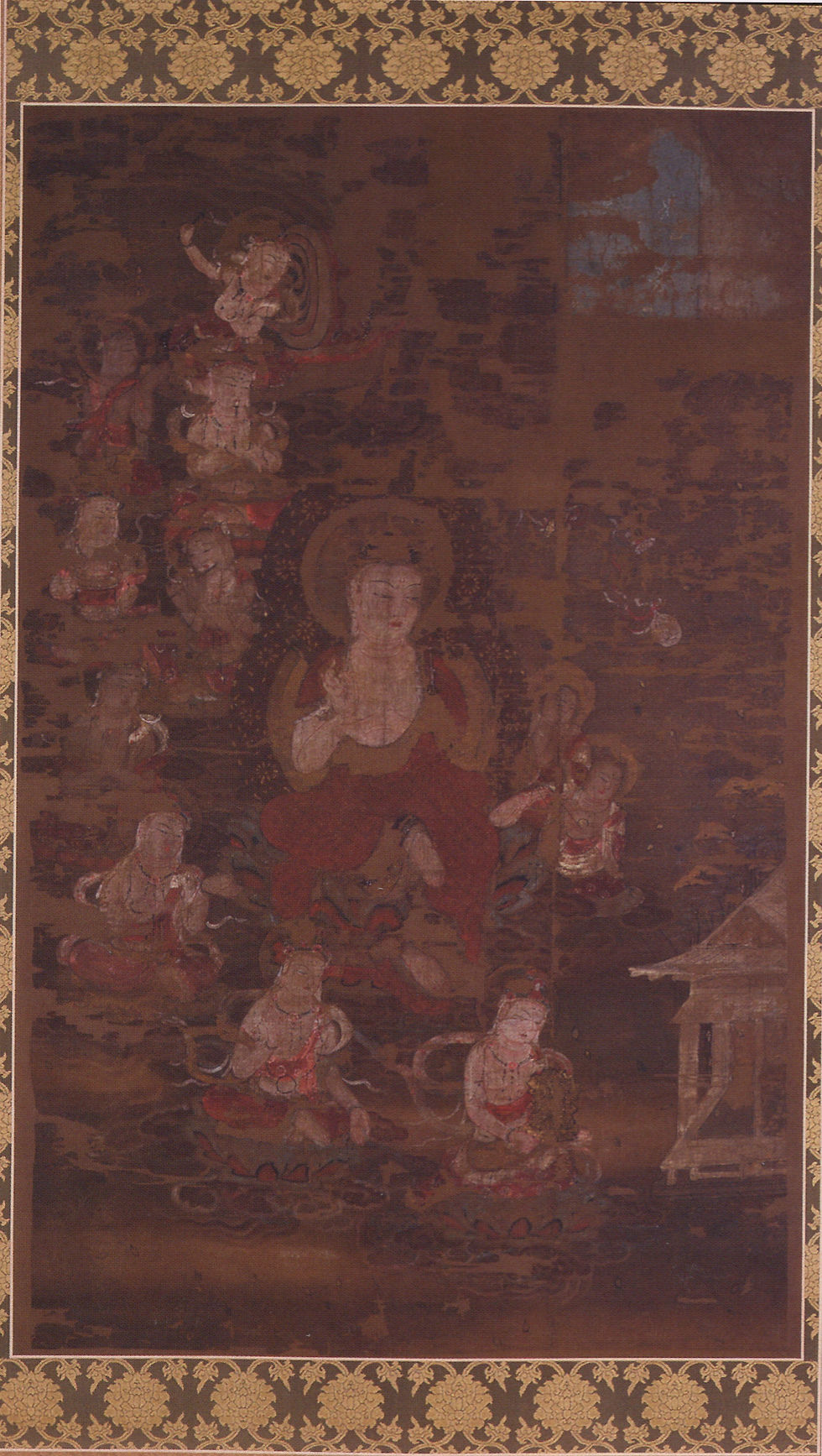
(On deposit at the Osaka City Museum of Fine Arts) 〈Heian period〉 The oldest example of a *Raigō-zu* (painting depicting the Descent of Amida Buddha) featuring a diagonal composition in which the figures descend from the upper left to the lower right of the picture plane.

(On deposit at the Azuchi Castle Archaeological Museum) 〈Azuchi-Momoyama period〉 A vermilion-sealed letter from Nobunaga addressed to a monk in Mt Konze (Kinshōzan), ordering him to relocate to Azuchi and warning that his temple's landholdings would be confiscated if he failed to do so.

(On deposit at the Azuchi Castle Archaeological Museum) <Azuchi-Momoyama period> A record of the Azuchi Religious Debate of 1579 (Tenshō 7). It contains the details of the debate, a written pledge from the Hokke sect promising not to instigate religious persecution in the future, and a copy of the vermilion-seal letter issued by Oda Nobunaga to inform his retainers of these matters.

(On deposit at the Azuchi Castle Archaeological Museum) 〈Edo period〉 Attributed to the Kano school. A portrait of Nobunaga in *sokutai* (formal court attire). The composition, featuring him pressing the upper end of the *shaku* (ritual baton) with his right hand, is unusual.
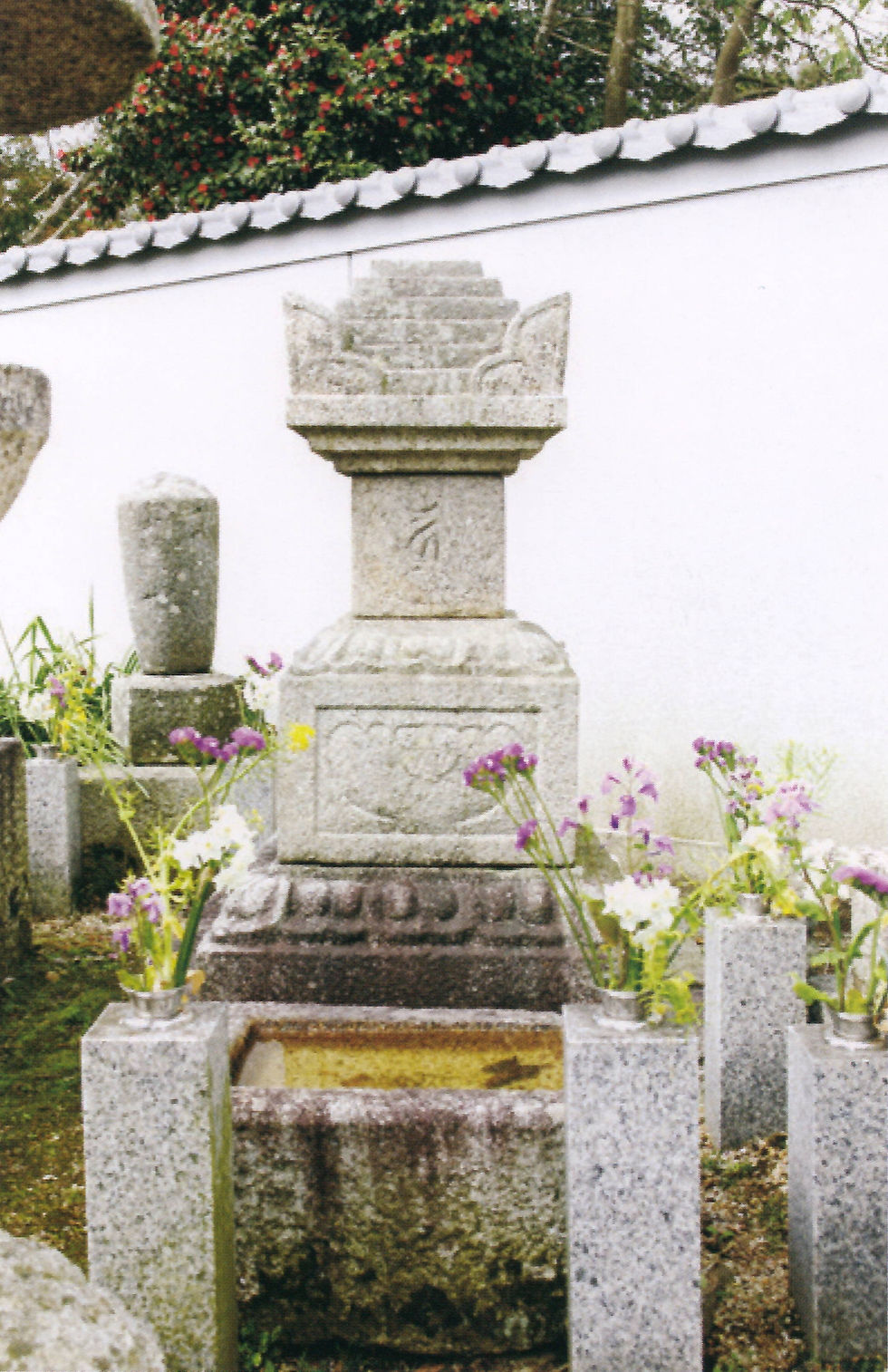
〈Nanboku-cho period〉 This is said to be a memorial tower for Rokkaku Ujiyori, the founder of Jion-ji temple that preceded Jogon-in. Buddhist images and Sanskrit characters are carved into the four sides of the tower's main body, while the roof features a *kurin* (nine-ringed finial) and corner ornaments at each of its four angles.
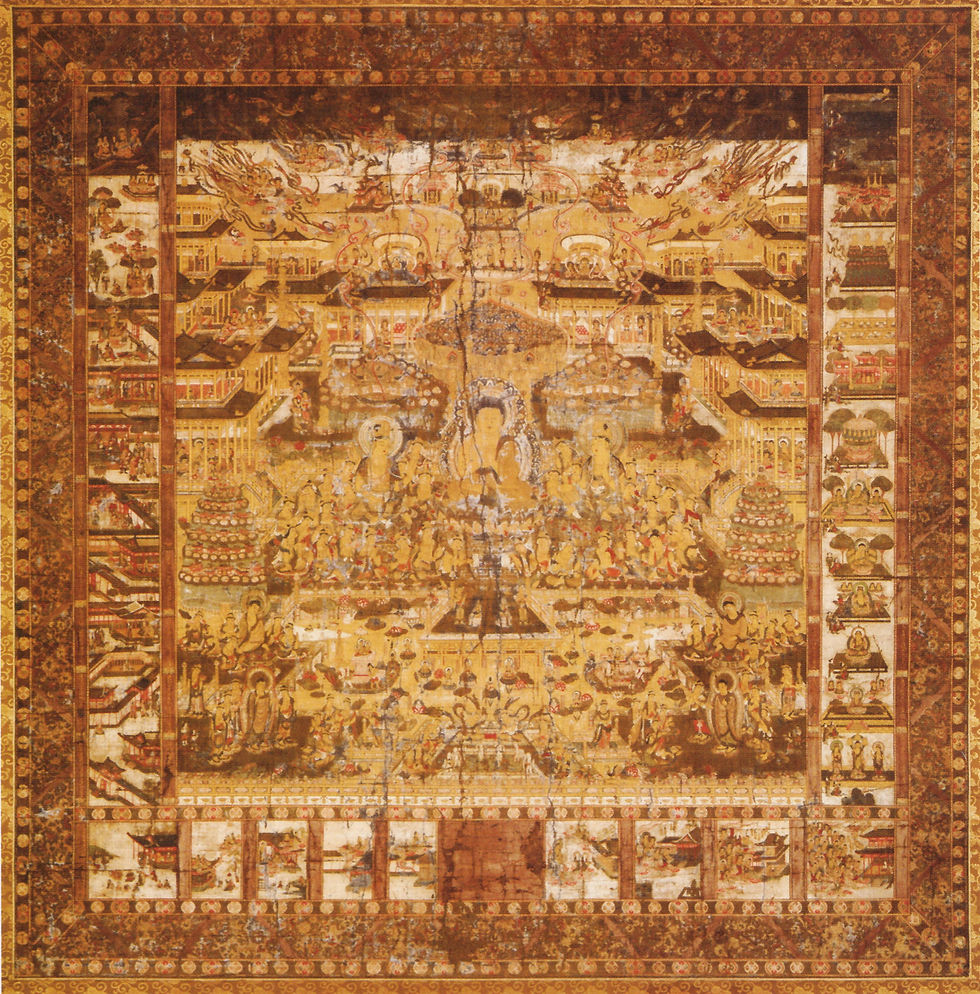
(On deposit at the Ritto City Museum of History and Folklore)〈Nanboku-cho period〉 The surrounding area features a sequence of images—resembling a series of film frames—depicting scenes from the *Sutra on the Contemplation of Amitayus* (*Kanmuryōju-kyō*), illustrating the journey toward the Pure Land of the central Amitabha Triad.
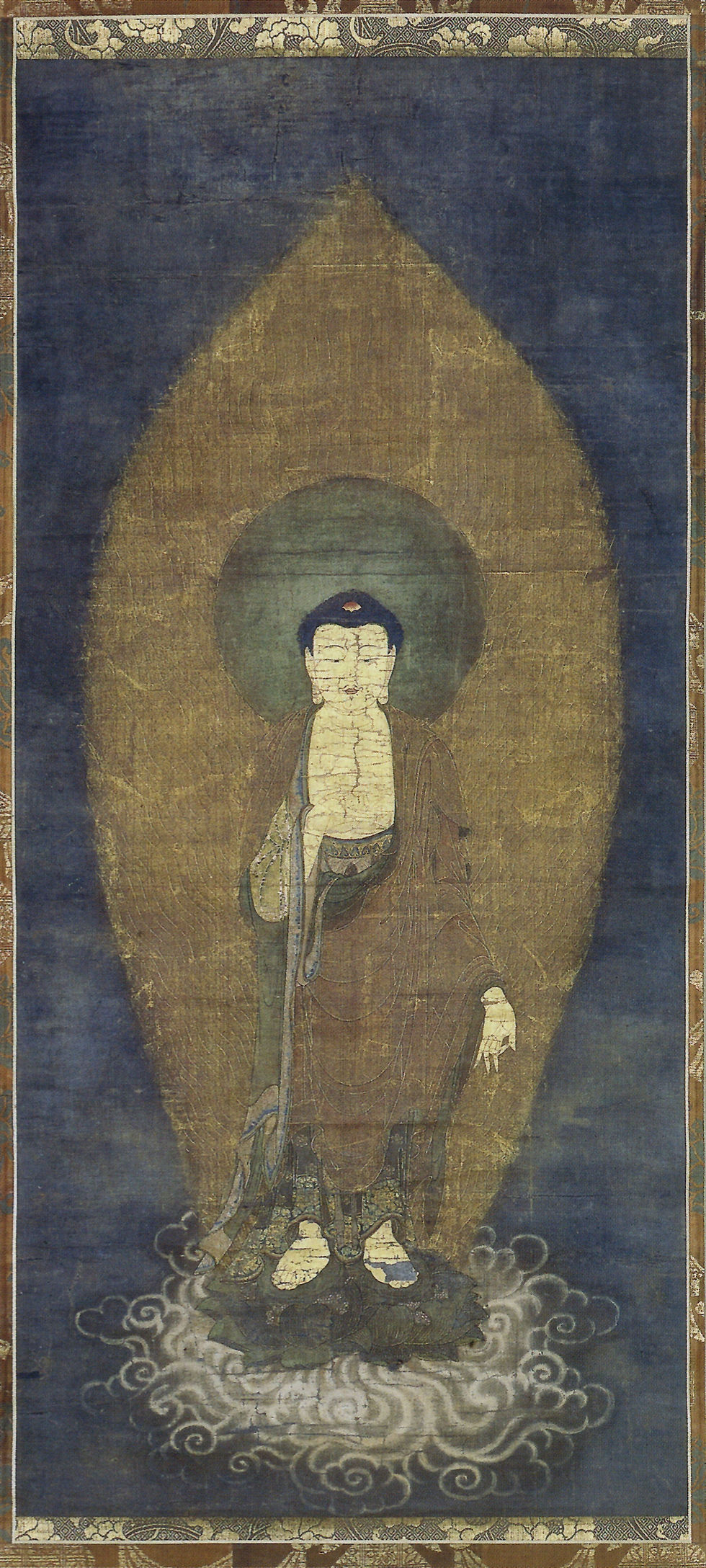
(On deposit at the Osaka City Museum of Fine Arts) 〈Nanboku-cho period〉 The golden flesh is outlined with fine vermilion lines; the snail-shell curls of the hair are painted in ultramarine, and the hairline in malachite green. Additionally, gold leaf is applied to the reverse side of the monastic robe and the boat-shaped halo.

(On deposit at the Azuchi Castle Archaeological Museum) 〈Edo period〉 This work depicts the story of the temple's founding priest, Ryūgyō Shōnin, who—urged by Kannon in a dream—read the *Sanbu Kanamashō* and converted to the Pure Land faith.

(On deposit at the Azuchi Castle Archaeological Museum) 〈Muromachi period〉 A portrait of the High Priest Ryūgyō, founder of Jōgon-in Temple. He established Amidaji Jōgon-bō on Mt. Konze in Kurita District (present-day Rittō City) and contributed to the development of the Jōdo (Pure Land) sect in the Ōmi region.

(On deposit at the Azuchi Castle Archaeological Museum) 〈Muromachi period〉 Oyo Myokan, the 8th head priest of Jogon-in Temple, was recognized for his great virtue by Oda Nobunaga—who had visited the area for falconry—and was ordered, somewhat forcibly, to relocate to Azuchi.